Kalbodyar

Lateral raise

Dumbbell Lateral Raise

ShoulderJoints: shoulder, scapula

Real execution

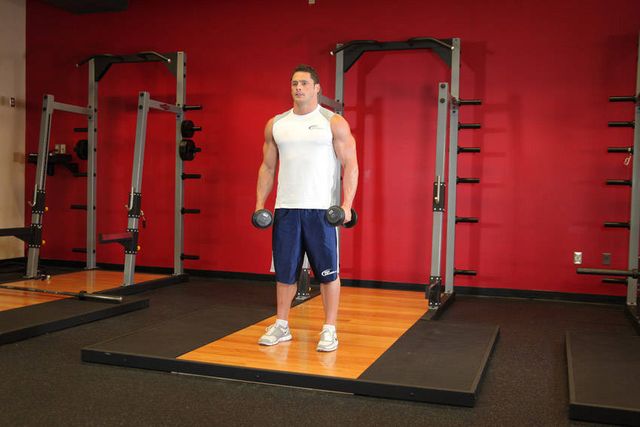
Lateral raise — start
Start
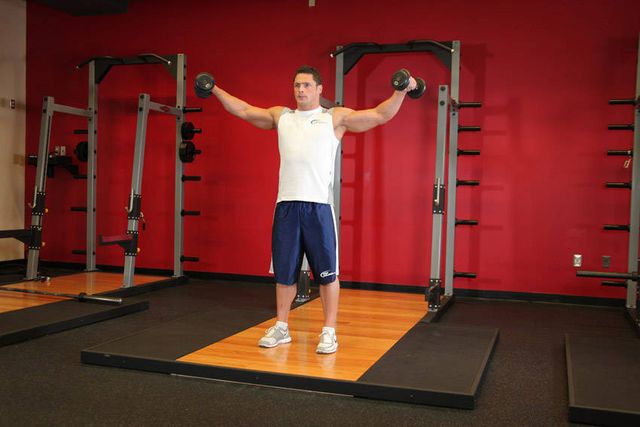
Lateral raise — finish
Finish

Photos: free-exercise-db (Unlicense; original source not fully documented) · Sources

Muscles involved, shown on the body

Body map: body-muscles (Apache-2.0) · Sources

At a glance

EquipmentA pair of light dumbbells
TypeSingle-joint
ChainOpen
Plane of movementForehead
Target muscleMiddle deltoid

Joint movements

JointGoing up (rising)Returning (lowering)
ShoulderAbductionAdduction
ScapulaUpward rotationDownward rotation
ElbowFixed with a slight bendFixed
Wrist, spineFixedFixed

Muscles involved

RoleMuscleAction in this movement
MainMiddle deltoidRaises the arm out to the side
SynergistSupraspinatusInitiates the movement
SynergistAnterior deltoidHelps, especially if the arm is slightly forward
SynergistUpper and lower trapezius, serratus anteriorRotate the scapula upward
StabilizerRotator cuff musclesHold the head of the humerus in the socket
StabilizerWrist extensorsKeep the wrist straight
StabilizerCore musclesHold the trunk fixed
AntagonistLatissimus dorsi, pectoralis majorMust relax

Origin and insertion of the target muscle

MuscleOrigin (fixed)Insertion (moving)
Middle deltoidAcromion of the scapula (tip of the shoulder)Deltoid tuberosity of the humerus

What must stay fixed

  • Elbows: with the same slight bend from start to finish.
  • Torso: no swinging.
  • Shoulders: do not rise toward the ears.

Phases and type of contraction

PhaseWhat happensMiddle deltoid contraction
RaisingThe arm rises to shoulder heightConcentric
LoweringThe arm returns with controlEccentric

Execution

  1. Stand straight, dumbbells at your sides, elbows slightly bent.
  2. Raise the arms out to the side and slightly forward to shoulder level.
  3. Keep the elbows and wrists at the same height.
  4. Lower over two to three seconds.

Why the weight must be light

The dumbbell sits at the end of a straight arm, far from the shoulder joint. The greater this distance (the moment arm), the heavier the same weight is for the muscle.

Common faults

FaultWhat happens in the bodyCorrection
Shrugging the shouldersThe upper trapezius takes overLighter weight; shoulders down
Swinging the trunkMomentum lifts the weight, not the deltoidSeated version; lighter weight
Raising above shoulder heightThe trapezius contributes more and the space under the acromion narrowsUp to the shoulder line is enough
Bending the elbows too muchThe moment arm is shorter and the movement becomes easierA slight, fixed bend
Wrist higher than the elbowThe anterior deltoid becomes more involvedLead with the elbow, not the hand

Coaching cue for the client

“Lift with your elbow, not your hand.”

← All exercises