Keeps the back straight under heavy load (isometric contraction)
Synergist
Quadriceps
Extends the knee, especially as the bar leaves the floor
Synergist
Adductor magnus
Assists hip extension
Stabilizer
Latissimus dorsi
Keeps the bar close to the legs
Stabilizer
Trapezius, rhomboids
Keep the shoulders from being pulled forward
Stabilizer
Abdominal muscles
Brace the trunk
Stabilizer
Forearm muscles
Grip the bar
Antagonist
Iliopsoas, rectus femoris
Hip flexors
The erector spinae does not produce movement, but the load on it is so high that this muscle counts as one of the main targets of the exercise.
Origin and insertion of the target muscle
Muscle
Upper head
Lower head
Gluteus maximus
Back of the pelvis and sacrum
Upper back of the femur
Hamstrings
Ischial tuberosity of the pelvis
Upper tibia and fibula
Erector spinae
Ribs and upper vertebrae
Sacrum and iliac crest
What must stay fixed
Lower back: straight from pelvis to neck, from the moment the bar leaves the floor until the end.
Arms: straight; the elbows do not bend.
Bar: kept close to the shins and thighs.
Feet: flat on the floor.
Phases and type of contraction
Phase
What happens
Gluteal and hamstring contraction
Coming up
The bar rises from the floor to the front of the thighs
Concentric
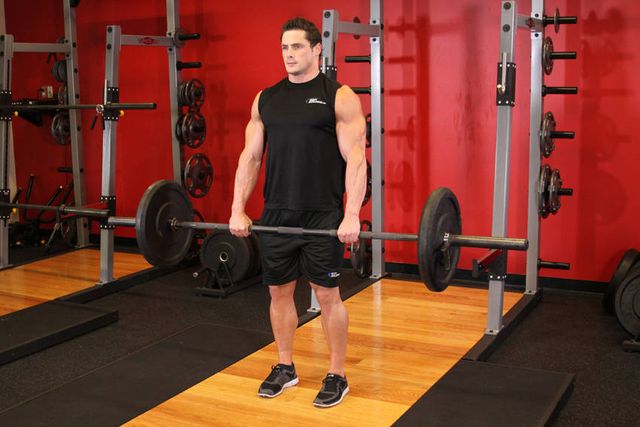
Standing up
Body straight, glutes tight
Static
Lowering
The hips move back and the bar returns to the floor
Eccentric
Execution
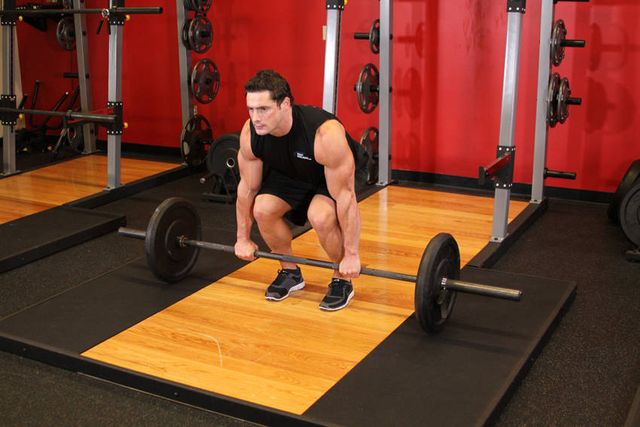
Feet hip-width apart; bar over the middle of the foot.
Hinge at the hips and grip the bar outside the shins.
Bend the knees until the shins touch the bar.
Lift the chest until the back is flat; take a breath and brace the abdomen.
Push the floor away with your feet and bring the bar up along the legs until you stand straight.
Return the bar to the floor by pushing the hips back.
Common faults
Fault
What happens in the body
Correction
Rounding of the lower back
The load shifts from the muscles to the discs and ligaments of the lower back
Use a lighter weight; start from a higher position
Hips rising before the chest
The knees extend too early and the lower back takes all the load
Hips and chest should rise together
Bar too far from the legs
The moment arm on the lower back gets longer
Drag the bar up along the shins
Pulling with bent arms
The biceps is subjected to a sudden stretch
Arms straight like ropes
Leaning back at the top
The lumbar vertebrae are compressed
Just stand straight
Jerking the bar
The body is not ready and the lower back takes the impact
First take the slack out of the bar, then lift
Safety
This exercise places a large load on the lower back. Do not move to heavy weights until the client can perform the hip hinge with a straight back. Suggested progression: hip hinge with a dowel, Romanian deadlift, then deadlift from the floor.
Coaching cue for the client
“Don't lift the bar; push the floor away from you.”